Arborist service
Expert tree care, pruning, and health services for Phoenix-area properties.
Explore Arborist service
Cave Creek sits at the edge of the Tonto National Forest in the high Sonoran Desert, where terrain is rocky, lots are large, and the soil is decomposed granite with washes that carry serious water during monsoon storms. Properties here are often acre-plus parcels with natural boulder outcroppings, equestrian setups, and native desert trees like palo verde, mesquite, ironwood, and desert willow growing in rocky, well-draining soil. The town's elevation and proximity to natural desert also means wildfire risk is a real consideration, and defensible space around structures matters. Monsoon washes can strip topsoil and expose root systems on sloped lots, which affects tree stability over time.
Cave Creek, AZ
AZ Service Area
Communities we serve
Cave Creek, AZ
Arborist Service
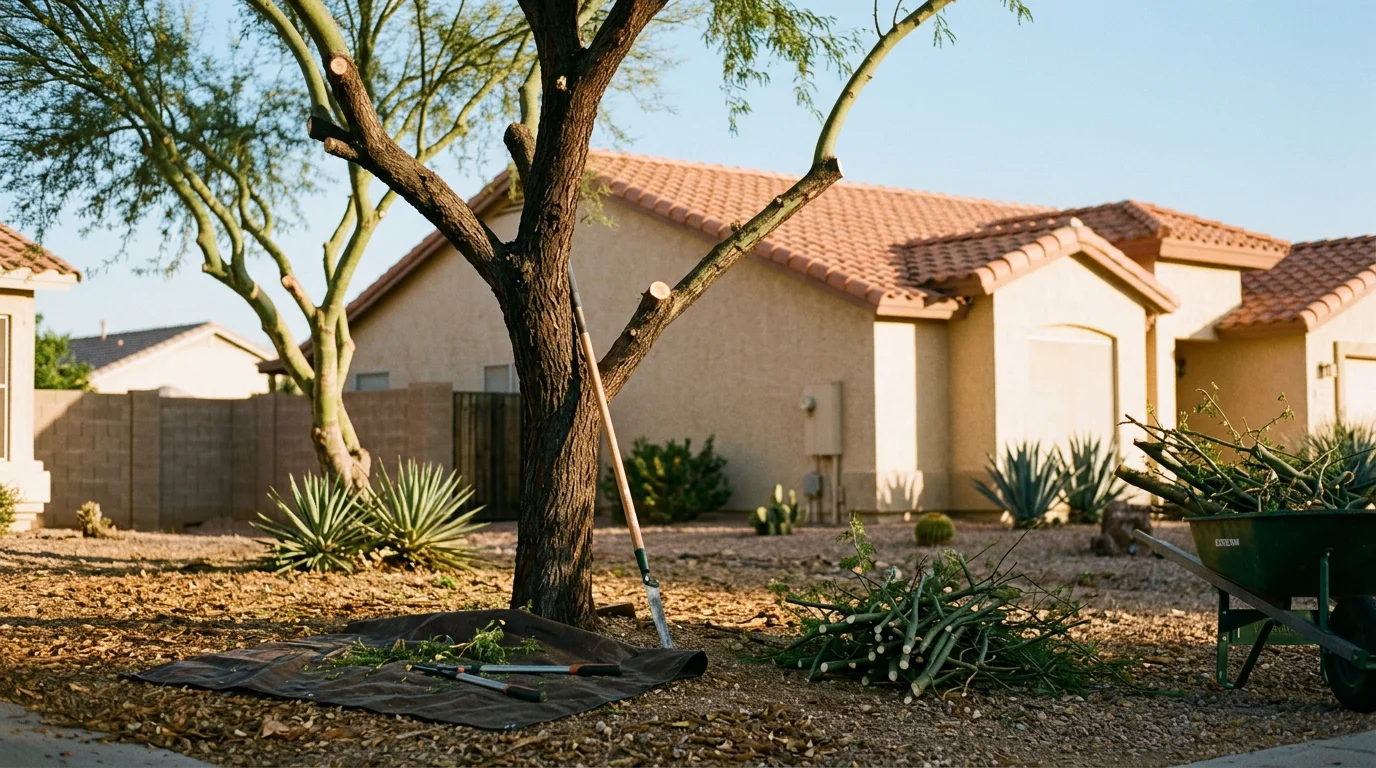
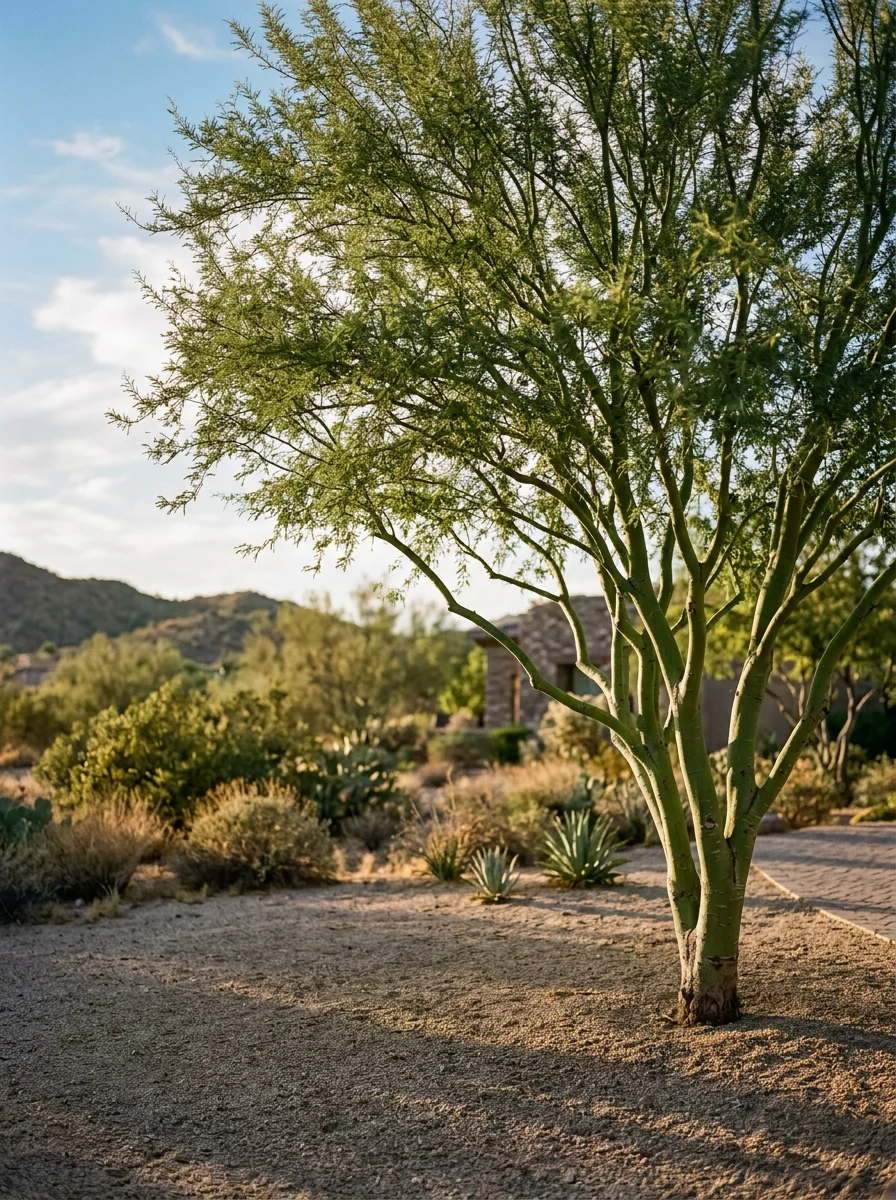
Cave Creek lots are large and naturally landscaped, with palo verde, mesquite, and ironwood growing in rocky decomposed granite soil. These native trees are drought-adapted and slow-growing, which means heavy pruning sets them back significantly. The right approach is selective: remove deadwood, improve clearance from structures, and reduce wind load on branches that overhang roofs or outbuildings. Stripping a native desert tree of its canopy to make it look 'trimmed' weakens it and exposes bark to direct sun damage.
Monsoon washes in Cave Creek carry real water volume during summer storms. On sloped lots, this water moves fast and strips topsoil from around root systems. Trees on grades above fifteen percent are at higher risk of root exposure and instability after repeated storm seasons. A hazard assessment on a sloped Cave Creek property looks at root plate condition, soil depth, and whether the tree's lean has changed since the last major storm. Catching instability early avoids a larger removal job later.
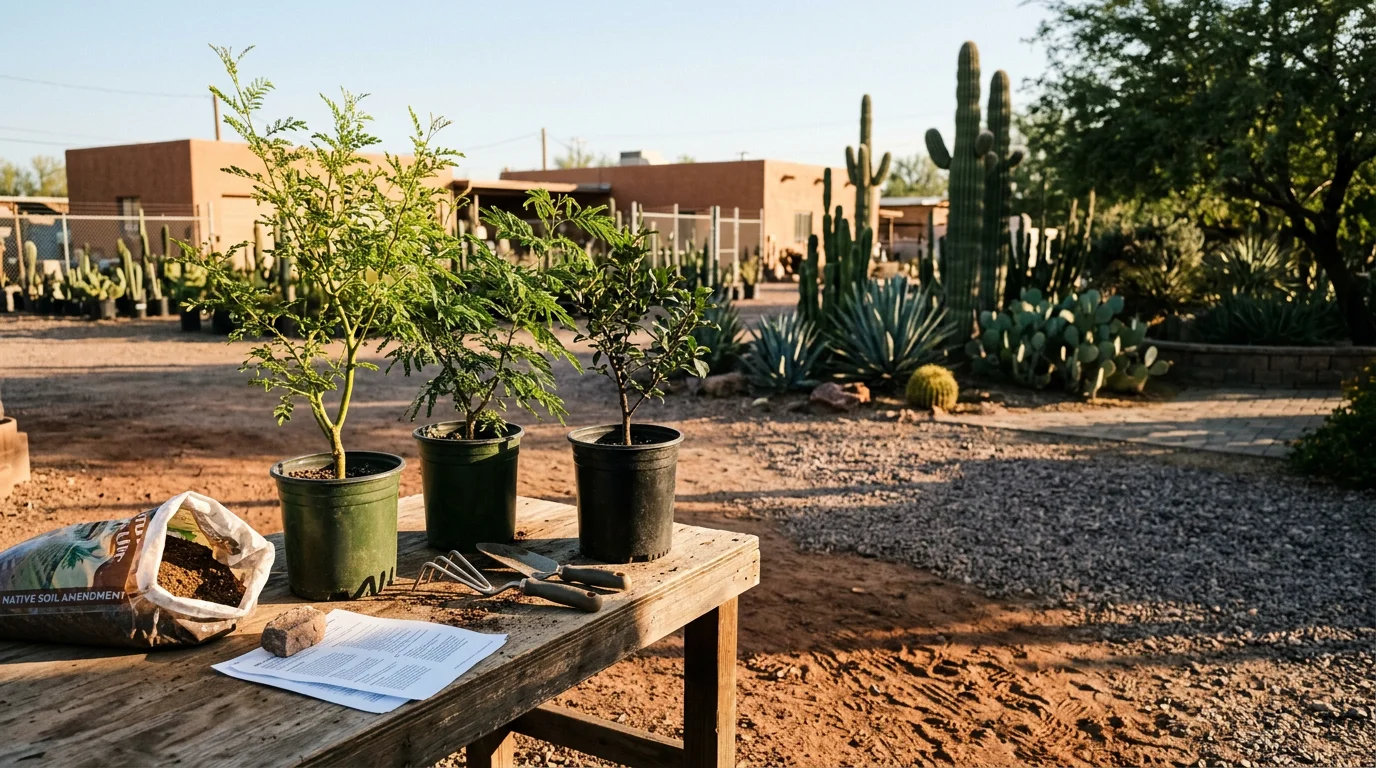
Wildfire risk near the Tonto National Forest boundary makes defensible space a practical concern for Cave Creek homeowners. Trees and large shrubs close to structures need clearance that reduces the path fire can travel. This is not the same as removing all vegetation: it means pruning lower limbs to raise canopy height, removing dead material, and spacing plantings so fire cannot ladder from ground level into the tree canopy. Tree planting choices also matter here, with native species like palo verde and ironwood being far less fire-prone than fast-growing imports.
At a glance
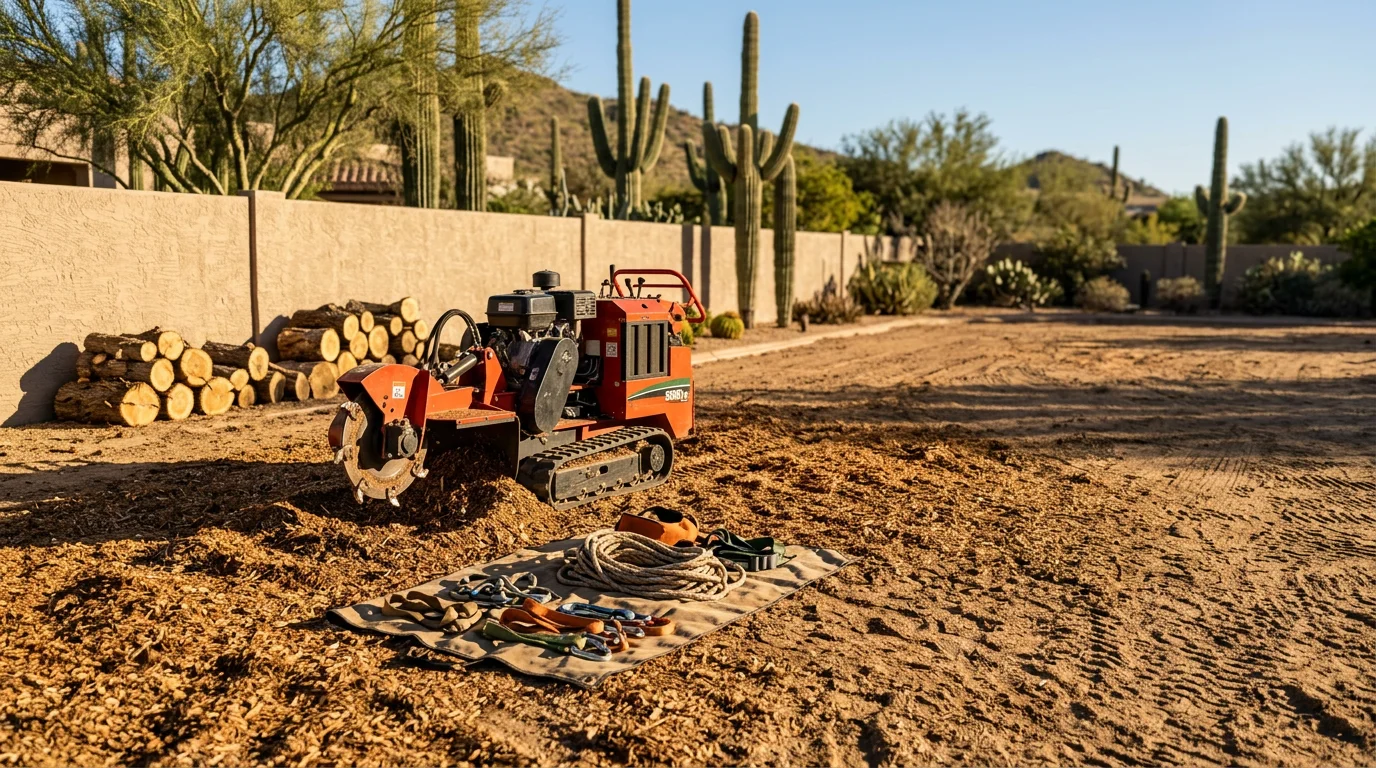
Hazard assessments are a high-priority service in Cave Creek, where sloped lots and monsoon wash activity can destabilize root systems on trees that look healthy from the surface. Tree removal on rocky, boulder-strewn terrain requires planning that accounts for equipment access on unpaved or graded driveways. Stump grinding in decomposed granite soil is more involved than in flat suburban lots. Full tree care maintenance for native species like palo verde and ironwood focuses on selective pruning that preserves the natural form these trees are known for in the Sonoran Desert.
Expert tree care, pruning, and health services for Phoenix-area properties.
Tree removal, stump grinding, and land clearing for Phoenix and surrounding areas.
Tree planting and landscape consultation for Phoenix-area homes.
Reviews are temporarily unavailable. Please check back soon.
Worked with us?
Leave a ReviewServing Cave Creek, AZ
Our crew knows Cave Creek, AZ. We will show up on time, assess the job honestly, and give you a clear written number before asking you to decide anything.
Also serving across Greater Phoenix:
Common questions from Cave Creek, AZ customers about our services, process, and coverage.
Yes, but selectively. These slow-growing native trees respond poorly to heavy cuts. Pruning focuses on removing deadwood, improving clearance from structures, and reducing wind load on branches near roofs or outbuildings. Removing too much canopy at once exposes bark to sun damage and weakens the tree's structure.
Fast-moving water during monsoon storms strips topsoil from around root systems on sloped properties. Over time, this exposes root plates and reduces the tree's grip in rocky decomposed granite soil. A hazard assessment after storm season checks root condition and lean to identify trees that have become unstable before they fail.
Defensible space around structures reduces the path fire can travel from ground vegetation into tree canopies. This means pruning lower limbs to raise canopy height, removing dead material from trees, and avoiding fast-growing, fire-prone species near buildings. Native trees like palo verde and ironwood are better choices near structures than imported species with dense, dry foliage.
Call us directly. Real answers, no scripts.
Stop by, call, or book online — we're always nearby when you need us.
Phone
(602) 703-8733Hours